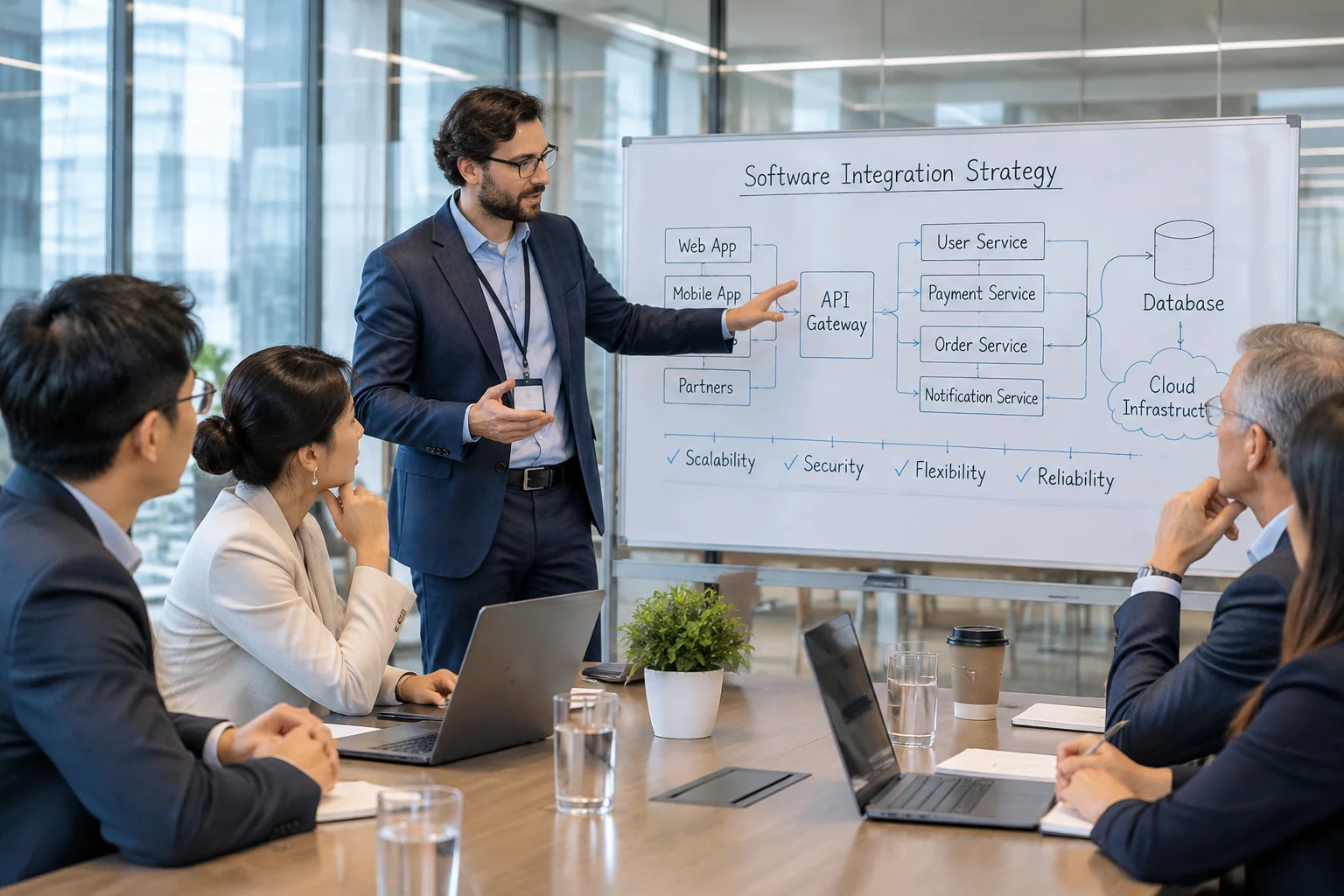
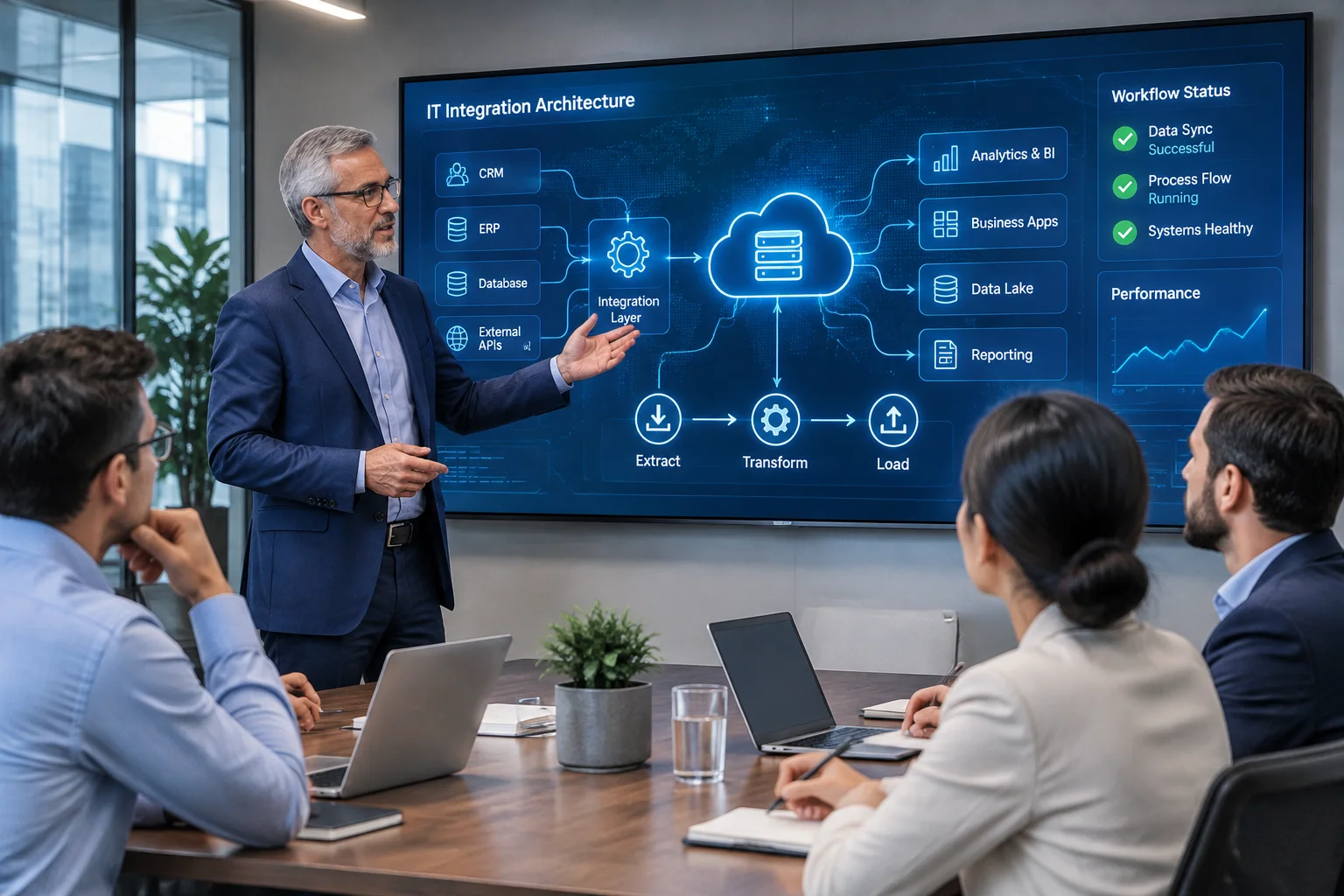
Growing companies rarely buy all their software on the same day. Instead, tools accumulate over years: a spreadsheet for inventory here, an invoicing platform there, a customer database acquired during a merger, and a specialized project management tool chosen by the design department. Each program solves an immediate problem on its own, but together they form a quiet trap. Staff spend their mornings copying numbers from one screen to type them into another, mistakes slip into reports, and managers stare at dashboards that show conflicting realities because the databases do not talk to each other.
System integration is the work of stopping this digital friction. It replaces manual copy-pasting with automated data pipelines and turns separate programs into a coherent ecosystem where information moves freely where it needs to go. At Quantorix Systems Group, we focus on making disparate tools cooperate without forcing businesses to throw away their working software or rewrite their entire operation from scratch.
Mapping the Real Workflow Before Writing Code
The biggest mistake in IT projects is rushing to connect databases before understanding how people actually use them. Technicians often write scripts that move data from point A to point B while ignoring the messy human reality happening at points C and D. An invoice might sit on a desk waiting for physical approval, or a customer record might require manual verification before it enters the accounting ledger. If you automate a broken process, you only succeed in breaking things faster.
We start every project by walking through the physical office and watching how teams handle their tasks. We look at the sticky notes stuck to monitors, the folders shared on local network drives, and the emails forwarded between departments just to confirm an order. Only when we understand the actual daily routine do we sit down to design the digital architecture. This prevents the common frustration of deploying expensive middleware that technically connects two servers but leaves human operators more confused than before.
Designing Resilient IT Architectures for Mid-Sized Firms
Mid-sized companies occupy a difficult middle ground in the software market. Off-the-shelf integration tools are often too rigid for their specific workflows, while enterprise-grade solutions require budgets and IT departments that belong to multinational corporations. Building custom bridges requires a careful balance between flexibility, maintenance cost, and long-term security.
When designing a new IT layout, we adhere to several core principles to keep systems stable:
- Keep data flows transparent so errors can be traced instantly.
- Use standard protocols wherever possible to avoid vendor lock-in.
- Design fallback options for when external cloud APIs go offline.
- Limit direct database access to protect sensitive records from corruption.
- Document every connection point so internal staff can troubleshoot basic issues.
- Plan for future software additions without requiring a full redesign.
By keeping the architecture straightforward, we ensure that the business does not become hostage to a fragile web of obscure scripts that only one person in the company understands.
Managing Rollout Without Stopping Daily Operations
The moment of truth for any integration project arrives on Monday morning when the new connections go live. If the transition is handled poorly, orders get delayed, customers receive incorrect invoices, and employees panic. To prevent these disasters, we never pull the plug on old systems overnight.
Instead, we run integrations in parallel with existing manual checks for a defined period. This allows the team to spot discrepancies in real time, adjust data mapping rules, and build confidence in the automated pipeline. Once the numbers match consistently across both old and new workflows, we phase out the manual steps gradually. The technology changes underneath, but the business continues to serve its customers without interruption.
Reliable software integration is rarely about inventing revolutionary technology. Most of the time, it is about patience, clear logic, and respecting the operational habits that made the business successful in the first place. When software tools finally support the workflow instead of obstructing it, companies find themselves with the mental bandwidth to focus on growth rather than troubleshooting error messages on a screen.










Luc Van de Velde
Lead IT Architect
Quantorix helped us link our old warehouse database with our new accounting software without losing a single record. Their team was straightforward, professional, and kept our shipping department running smoothly throughout the transition.